

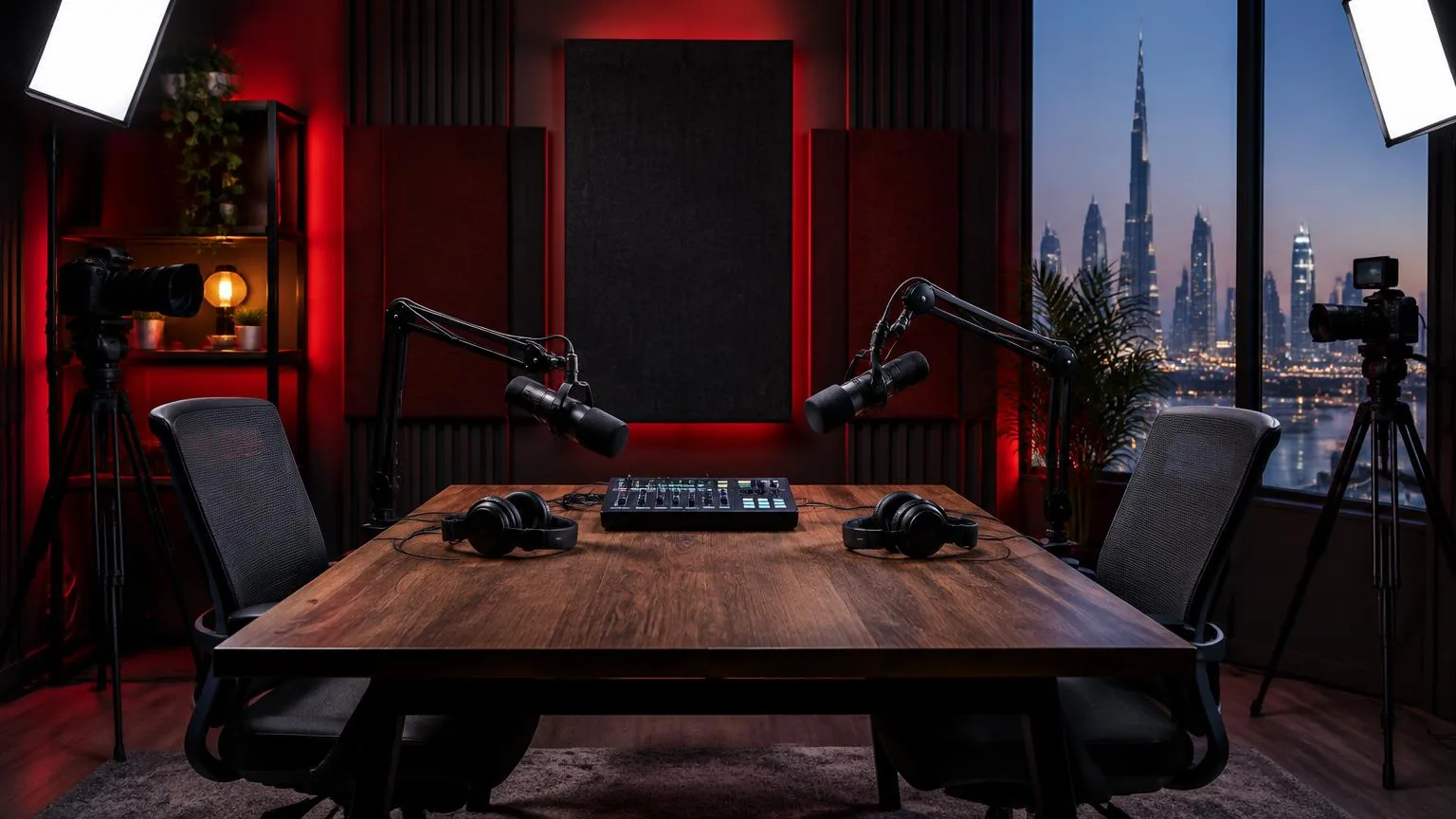
Glossary: Podcasting
Podcast studio
A space arranged for recording spoken conversations with controlled acoustics and a reliable workflow.
Definition
A podcast studio is a space configured to record spoken programmes with suitable acoustics, microphones, monitoring and recording equipment. It may support audio only or include cameras, but its effectiveness depends on the complete recording environment rather than its appearance alone.
What the room must do
The room should let participants speak comfortably while keeping unwanted sound manageable. External traffic, neighbouring activities, air conditioning and equipment fans can all reach the recording. Inside the room, reflections from walls, glass and tables can make speech sound hollow or distant. These are different problems: reducing reflections does not automatically stop sound passing through a wall or door.
A useful assessment starts with listening during the hours when recording will actually happen. Check the room with ventilation running, doors closed and nearby spaces occupied. Record a short conversation, not just silence, because reflections become clearer around words. A furnished room may perform differently once furniture, curtains or participants change, so the intended session layout matters.
For a permanent installation, studio design consultancy can help turn operational needs into a coordinated brief. Acoustic decisions should sit alongside ventilation, access, cable routes and building requirements rather than being added after decorative finishes are fixed.
Build the recording chain around the conversation
Each speaker normally needs an appropriate microphone position and a way to hear relevant programme audio. An interface or recorder converts microphone signals into recorded tracks. Separate tracks give the editor more control over interruptions, differences in speaking level and occasional noises, although they do not prevent microphones from picking up neighbouring voices.
| Element | Practical question |
|---|---|
| Seating and microphones | Can each person maintain a comfortable speaking position without blocking eye contact? |
| Recording inputs | Can every required source be captured on its intended track? |
| Headphone monitoring | Can participants hear the conversation without distracting delay or speaker spill? |
| Session storage | Is there sufficient space, clear file naming and a verified copying procedure? |
| Operator position | Can someone monitor recording status and intervene without disrupting the discussion? |
Choose equipment after establishing guest numbers, remote connections and programme format. A two-person interview and a rotating panel create different routing and supervision needs. More equipment can introduce additional failure points if nobody understands how the signals travel.
Prepare the session before guests arrive
Create a session template with named tracks, the agreed recording format and a clear destination folder. Check available storage and confirm that the recording application receives every input. Test with real speech at normal and enthusiastic levels, leaving headroom for laughter. A visible waveform alone does not prove that the intended microphone is being recorded.
- Listen through headphones to each channel individually, then check the combined conversation.
- Secure stands and cables so gestures, chairs and drinks do not disturb the microphones.
- Silence unnecessary notifications and agree how urgent interruptions will be handled.
- Record a short test, stop it and play the saved file back before starting the interview.
- Capture a brief room tone sample with everyone settled and the normal equipment operating.
Assign responsibility for watching the recorder throughout the session. If a backup is planned, test its actual signal source and storage separately. A duplicate file on the same failing device is not an independent backup.
Coordinate audio, video and guest comfort
A video podcast introduces lighting, camera positions, sightlines and synchronization requirements. Attractive framing should not force speakers far from their microphones. Likewise, a microphone arm that looks tidy in one shot may obstruct another camera or transmit table movement. Rehearse ordinary gestures, page turns and eye contact rather than checking only a motionless seated pose.
Lighting and computers can add heat or fan noise, so assess the fully operating setup. Do not disable essential ventilation simply to obtain a quieter take. Plan breaks and safe adjustments with the venue instead. Accessible entry, suitable seating, readable prompts and an understandable headphone mix also affect whether a guest can contribute comfortably.
For a proposed session at a podcast studio in Abu Dhabi, a producer might confirm seating, remote guest routing and camera requirements before the booking is finalized. These are planning questions, not assumptions about what any particular facility provides.
Set permissions and protect the recordings
Before recording, explain whether the session includes audio, video, photographs, transcripts or promotional excerpts. Obtain appropriate permission for the intended uses and clarify whether guests have an agreed review stage. Permission to join a private discussion should not be treated as permission to publish every informal exchange captured before or after it.
Keep access to raw recordings limited to the people who need them. Use controlled transfer methods, identify the approved recipient and agree retention and deletion responsibilities. If external transcription or processing is proposed, check whether the material may be uploaded and how that provider handles it. Confidential interviews may require a different workflow from public entertainment episodes.
At handover, provide clearly labelled files and notes describing interruptions, retakes and publication restrictions. Preserve original recordings before audio editing begins. Record which version has been approved so that an earlier cut or unreviewed excerpt is not accidentally distributed.
Judge the studio by a usable test
A useful studio test includes quiet speech, animated discussion, brief pauses and simultaneous reactions. Listen for intelligibility, changing room tone, distracting headphone delay and differences between seats. Ask whether the operator can recover from an interruption without losing track of the session. The best arrangement is one the team can run consistently, not simply the one with the most visible equipment.
Frequently asked questions
Does a podcast studio need to be completely silent?
No, but unwanted sound should be low and stable enough for the intended programme. A faint consistent background may be manageable, while intermittent construction or door noise can interrupt speech and require retakes.
Is acoustic foam the same as soundproofing?
No. Absorptive materials can reduce some internal reflections, depending on their design and placement. Limiting sound transmission involves the building assembly, openings and other paths. Adding foam alone does not establish effective sound isolation.
Can several guests share one microphone?
They can, but distance and level become harder to control, and individual editing options are limited. Dedicated microphones usually offer more flexibility when guests interrupt, speak at different levels or sit in different positions.
Should the studio record every speaker separately?
Separate tracks are often helpful, especially for panels and remote interviews. They allow targeted adjustments, but room reflections and microphone bleed still remain. Good placement and considerate conversation are important even with multitrack recording.
What should be checked before leaving the studio?
Confirm that the session files open and contain the expected tracks, then verify the agreed copy or transfer. Note missing pickups, restrictions and approval responsibilities while the details are fresh, rather than relying on memory later.
Record your podcast
Multi-mic podcast and interview recording with optional video at our Abu Dhabi studio.
Podcast studio in Abu Dhabi