

Glossary: Lighting and stage
Haze machine
An effects device that creates a fine airborne atmosphere to make lighting paths more visible.
Definition
A haze machine creates a fine airborne atmosphere that scatters light and makes beams or other lighting effects more visible. Its operation requires compatible fluid, controlled distribution, venue permission and coordination with the responsible fire-system and safety personnel.
How haze changes the lighting image
A haze machine introduces small particles or droplets into the air using a process determined by its design. These scatter some of the passing light toward viewers, revealing paths that would otherwise be difficult to see from the side. Different machines use different fluids and generation methods, so the term haze does not describe one universal chemical composition or operating behavior.
The aim is often an even, restrained atmosphere rather than a visible cloud near the device. Output level, fan behavior, room volume and ventilation all affect distribution. A machine that appears ineffective beside a strong air return may still send atmosphere into an adjacent space, so local appearance alone is not a reliable guide to the overall result.
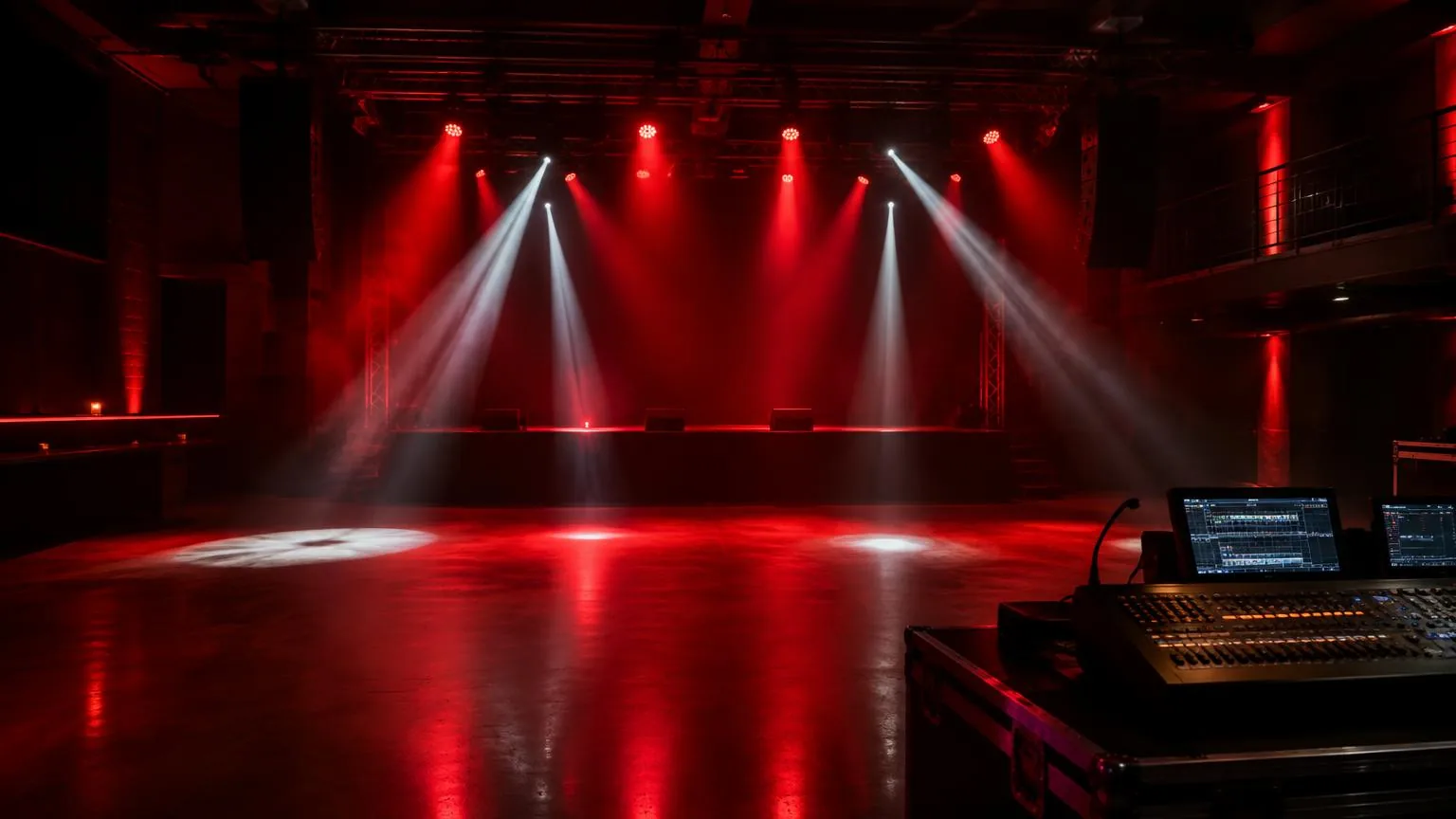
A beam light can become more visually defined in approved haze, but more atmosphere is not always better. Excess can lower scene contrast, wash out screens and obscure scenery. Evaluate the complete lighting image instead of treating maximum beam visibility as the only objective.
Permission and fire-system coordination come first
Obtain venue permission before bringing haze into operation, including during rehearsals and technical tests. Provide the machine information, proposed fluid, safety data and intended timing to the responsible venue personnel. Atmospheric effects can interact with detection systems, so the venue must assess the proposal and coordinate any required procedures through its authorized fire-system management.
Never disable, cover or otherwise interfere with detectors to accommodate the effect. The production crew should not improvise alterations to fire-system operation. If the venue cannot authorize the proposed use within its safety arrangements, use a lighting design that works without haze. An attractive effect is not a reason to bypass life-safety controls.
Consider performers, crew and audience members who may be sensitive to atmospheric products. Agree a communication route, stop authority and response if anyone reports discomfort. Product documentation and a low visible concentration do not justify claiming that an effect is harmless for every person or suitable for every space.
Equipment, fluid and airflow checks
| Item | Required check |
|---|---|
| Fluid | Use only the type approved for the specific machine |
| Placement | Maintain ventilation, access and manufacturer clearances |
| Air movement | Observe supply, return and leakage paths with venue cooperation |
| Surface condition | Inspect for residue or slippery deposits where relevant |
| Control | Confirm local and remote stop behavior |
| Documentation | Keep instructions and safety information available to responsible personnel |
Do not substitute homemade mixtures or assume that fluids from different machines are interchangeable. Incorrect products can damage equipment or create unintended emissions. Follow filling, warm-up, cleaning and shutdown instructions, and keep containers correctly identified. Protect the machine from being struck, blocked or handled by unauthorized people during the event.
Ventilation changes can alter distribution substantially. Coordinate with the venue rather than changing building systems independently. Keep exits and required signage visible, and prevent equipment or cables from obstructing routes. If the machine or fans are installed overhead, competent professionals must assess and carry out the mounting and secondary retention.
Example: a rehearsed stage reveal in Abu Dhabi
A stage reveal in Abu Dhabi proposes a short aerial lighting sequence before a presentation. The production sends the venue the atmospheric-effect details in advance and receives approval for a supervised test. The responsible teams agree when testing may occur, who can stop the effect and how concerns will be communicated.
- Inspect the approved machine, fluid and placement before introducing atmosphere into the occupied production space.
- Begin conservatively under the agreed supervision and observe distribution with the intended lighting and ventilation operating.
- Check stage visibility, exit signage, screens, camera contrast and nearby areas rather than watching only the beams.
- Program restrained output if remote control is used, and verify that the operator can stop generation promptly.
- Rehearse a no-haze alternative and confirm the authorized shutdown and post-use inspection procedure.
The lighting console may trigger output through a control interface, but approval and supervision remain human responsibilities. If air conditions change or someone reports discomfort, the team stops generation and follows the agreed response. A saved cue does not override the venue's authority or the current conditions.
Common haze operation mistakes
- Assuming permission for another event or room also authorizes the current production can bypass a necessary assessment.
- Increasing output before understanding airflow can create localized clouds or spread atmosphere into unintended spaces.
- Using unapproved fluid can affect equipment performance and invalidate the assumptions behind the operational assessment.
- Treating low output as automatically safe ignores detection, sensitivity, residue and visibility considerations.
Keep operation deliberate and observable. Recheck the effect after room occupancy or ventilation changes, and maintain communication with the designated venue contact. After use, follow the manufacturer's shutdown process and inspect the surrounding area as required. Document problems so a later crew does not repeat an unsuitable placement or operating assumption.
Frequently asked questions
Is haze the same as theatrical fog?
The terms often describe different visual effects and distribution characteristics, but product behavior varies. Check the actual machine, fluid and documentation instead of relying on a general label when assessing suitability.
Can haze trigger a fire alarm?
It can interact with detection systems. Obtain venue permission and coordinate with responsible fire-system personnel before testing or use. Never disable, cover or interfere with detectors to make the effect possible.
Can I use any haze fluid?
No. Use only fluid approved for the specific machine and follow its handling instructions. Similar packaging or marketing language does not establish chemical, thermal or operational compatibility.
Does haze make lighting brighter?
It primarily makes light paths more visible through scattering. It can also reduce apparent contrast or affect screens and cameras. The best result is a controlled balance, not necessarily more output.
What if the venue refuses haze?
Respect that decision and use a prepared alternative based on surface lighting, scenery or other permitted techniques. Do not test secretly, introduce a different product without approval or alter fire-safety equipment.
Light your next show
Stage, sound and lighting for concerts and corporate events, planned and run by one team.
Music event management