

Glossary: Lighting and stage
Beam light
A fixture designed to produce a narrow, concentrated shaft of light, often used for aerial effects.
Definition
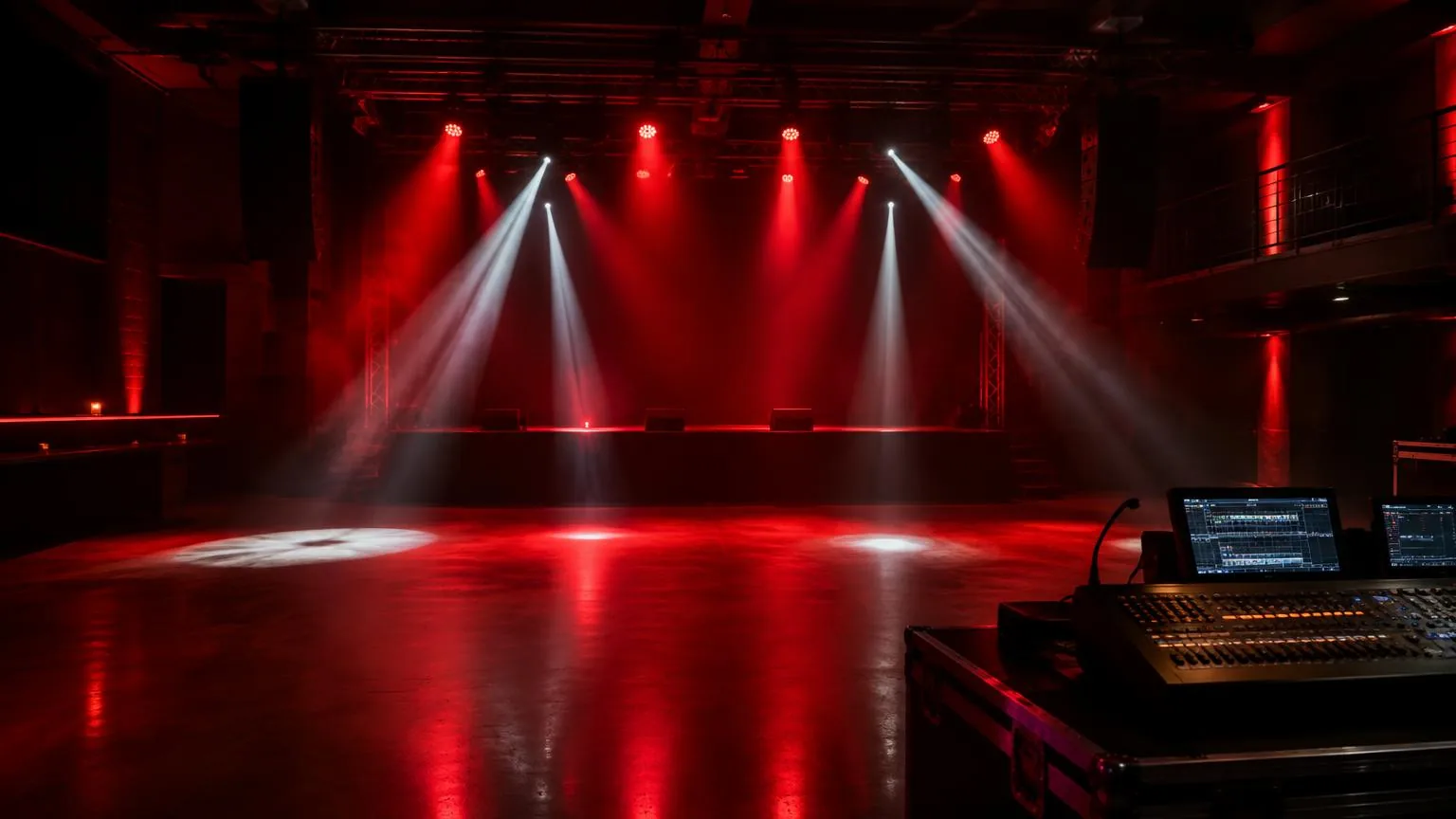
A beam light is a fixture designed to produce a narrow, concentrated output, commonly used to create visible shafts and geometric aerial effects. Its visual impact depends on optics, distance, background contrast and any approved atmospheric effect in the space.
How narrow beams become visible
Beam fixtures use optical systems intended to keep the output narrow over useful distances. Many are moving heads with color and effect components, though movement is not what defines the beam category. Some include prisms or pattern wheels that split or shape the output. Available functions and focus behavior vary, so the equipment specification must describe more than the product label.
Light traveling through clean air is not automatically visible from the side. Suspended particles scatter some of it toward the viewer, revealing a shaft in space. A haze machine can provide controlled atmosphere where permitted. Without atmosphere, the fixture may still create a bright point or pool on a surface, but the intended aerial geometry can be much less apparent.
Ambient light and background brightness also affect visibility. A narrow shaft against a dark background reads differently from the same output in daylight or in front of a bright screen. Test the complete scene instead of assuming that a strong fixture will overcome every viewing condition.
Why beams are a specific design tool
Beam looks can add scale, rhythm and spatial structure without relying only on scenery. Parallel lines, fans and intersecting patterns can mark a musical change or support a reveal. Their effectiveness comes from composition and timing. Continuous movement with no relationship to the event can quickly become distracting and make every moment feel visually similar.
A beam fixture is usually not the first choice for broad, comfortable face coverage. Its concentrated field can create harsh transitions, glare and small hot spots. Keep practical illumination separate unless the selected fixture and operating conditions genuinely suit both tasks. The distinction between beam, spot light and wash functions helps avoid equipment choices based solely on spectacle.
Narrow, intense output requires careful placement and documented operating limits. Do not assume a fixture is safe to point anywhere because it is not a laser. Follow manufacturer warnings, required viewing distances and clearances, and have competent professionals assess the installation and programmed use.
Design, atmosphere and exposure checks
| Check | Practical consideration |
|---|---|
| Beam path | Keep intense output away from eyes and unapproved audience directions |
| Camera positions | Avoid direct exposure into lenses and confirm the imaging team's requirements |
| Materials | Observe clearance from scenery and other surfaces |
| Atmosphere | Obtain venue permission and coordinate with fire-system management |
| Movement | Review the whole transition, not only its final position |
| Outdoor use | Assess weather, environmental suitability and any relevant local restrictions |
If haze is proposed, agree its use before programming a design that depends on it. The venue must coordinate the effect with its fire-system procedures and responsible personnel. Never disable or cover detectors to accommodate the look. Ventilation, sensitive occupants, nearby spaces and residue requirements may limit or prevent atmospheric use.
Program movement limits and intensity choices as part of the design, but do not treat software limits as the only safety measure. Mounting position, physical orientation and operational supervision remain important. Suspended fixtures and their supporting systems require competent rigging professionals using approved equipment and methods.
Example: an opening sequence in Abu Dhabi
An indoor event in Abu Dhabi uses a short opening sequence before the presenter arrives. The designer proposes symmetrical beam fans aimed through approved areas above the stage, with separate stable illumination for the presenter. The production first confirms whether the venue permits haze and whether the planned effect can operate within its procedures.
- Review fixture positions, clearances and beam directions with the responsible technical and venue teams.
- Confirm the atmospheric-effect plan, including authorized testing and fire-system coordination, before introducing haze.
- Check each programmed movement from audience seats, stage positions and camera locations.
- Rehearse the opening at show speed, then transition cleanly to the presenter's static lighting state.
- Prepare a version that works without haze if conditions or venue approval change.
The operator uses the strongest aerial look briefly so it remains a meaningful contrast with the presentation that follows. If the camera team identifies a problematic direction, the movement is revised and retested. Turning down the camera exposure is not an adequate substitute for correcting an unsuitable beam path.
Common beam lighting mistakes
- Designing the entire effect around haze before receiving permission can leave the show without a workable visual alternative.
- Judging safety from a paused final position ignores the directions crossed during movement.
- Using beams as general face lighting can create uncomfortable glare and inconsistent coverage.
- Adding more fixtures without improving composition can create visual clutter rather than a stronger design.
Review every look in context with screens, scenery and the event's content. Preserve quieter states so the audience can recognize a deliberate change in energy. If operating conditions change, stop and reassess rather than assuming that a previously rehearsed effect remains appropriate in a different room arrangement or atmosphere.
Frequently asked questions
Is a beam light a laser?
No. They are different technologies with different characteristics and requirements. However, a beam fixture can still produce intense output, so manufacturer guidance and a competent assessment of placement and use remain essential.
Will beams be visible without haze?
Their aerial paths may be faint or effectively invisible in clean air. You may still see the source and illuminated surfaces. Background contrast and existing airborne particles also influence the result.
Can beam lights point into the audience?
Do not assume that is acceptable. Follow the fixture's warnings, required distances and the production's assessed operating limits. Design beam paths to avoid direct intense exposure to eyes.
Are beam lights useful outdoors?
They can be, but visibility depends strongly on ambient light and atmospheric conditions. Equipment suitability, weather, nearby activity and any applicable restrictions need assessment before the design is approved.
What should happen if haze is not permitted?
Use a rehearsed alternative based on scenery, surface lighting, color or other permitted effects. Do not introduce atmosphere without authorization or interfere with detectors to preserve an aerial look.
Light your next show
Stage, sound and lighting for concerts and corporate events, planned and run by one team.
Music event management