

Glossary: Event production
Site visit
A venue inspection used to verify event requirements, constraints and unresolved planning assumptions.
Definition
A site visit is a planned inspection of an event location to verify conditions that affect production design, access and operation. It brings relevant venue and production representatives together to examine assumptions, document constraints and assign follow-up actions before delivery.
Replace assumptions with verified information
Venue photographs and room dimensions rarely explain the complete operating environment. A site visit connects drawings and proposals with the real space, including how people and equipment will reach it. The objective is not simply to admire the room or confirm that a stage appears to fit. It is to identify what the proposed event requires and what still needs confirmation.
The visit should have a defined purpose. An early feasibility review may compare layout options, while a later technical visit may verify agreed interfaces and delivery arrangements. These are different tasks and may require different participants. A structured visit produces decisions, reliable observations and assigned questions rather than a collection of photographs whose meaning only the photographer remembers.
Prepare participants and documents in advance
Send the current event brief, proposed layout and unresolved questions before the appointment. Ask the venue to involve representatives able to address access, technical facilities and operational restrictions. Bring relevant department leads where their input is needed. Not every supplier must attend every visit, but important specialist questions should not be answered by someone guessing on their behalf.
| Preparation item | Reason to bring it |
|---|---|
| Programme outline | Connects venue observations with the intended event formats. |
| Proposed layout | Provides a common reference for positions, circulation and alternatives. |
| Equipment assumptions | Identifies requirements that need specialist or venue confirmation. |
| Access questions | Directs attention beyond the audience entrance and event room. |
| Action record | Captures open points, owners and required response dates. |
Check whether access permissions or venue privacy rules affect photography and the areas available for inspection.
Review access, layout and operating conditions
Walk the proposed equipment route as well as the guest route. Loading arrangements, internal movement, storage and restricted areas can shape the production plan. The visit should establish questions for load-in / load-out rather than assume that a convenient entrance is available for suppliers. Confirm whether observed conditions will be the same on the event dates.
- Review audience circulation, accessible routes and the relationship between seating and stage positions.
- Identify backstage waiting areas and their connection to entrances and exits.
- Discuss venue activity that could affect noise, access or shared facilities.
- Record technical interface questions for the relevant competent specialists.
Observations should distinguish what was seen from what was stated, and both from what remains unverified.
Document evidence without treating it as approval
Label photographs and measurements so another team member can understand their location and purpose. Note the drawing version used and any discrepancies that need reconciliation. A visible socket does not establish a suitable power arrangement, and an apparent ceiling attachment does not establish an approved support point. Technical suitability requires the relevant documentation and competent assessment.
Keep specialist confirmation explicit
For rigging or other safety-critical work, the visit can identify requirements and arrange the professional review process. It does not authorize installation simply because equipment positions were discussed in the room. Record who must confirm each issue and what evidence is required. This prevents a casual conversation from later being remembered as formal venue or engineering approval.
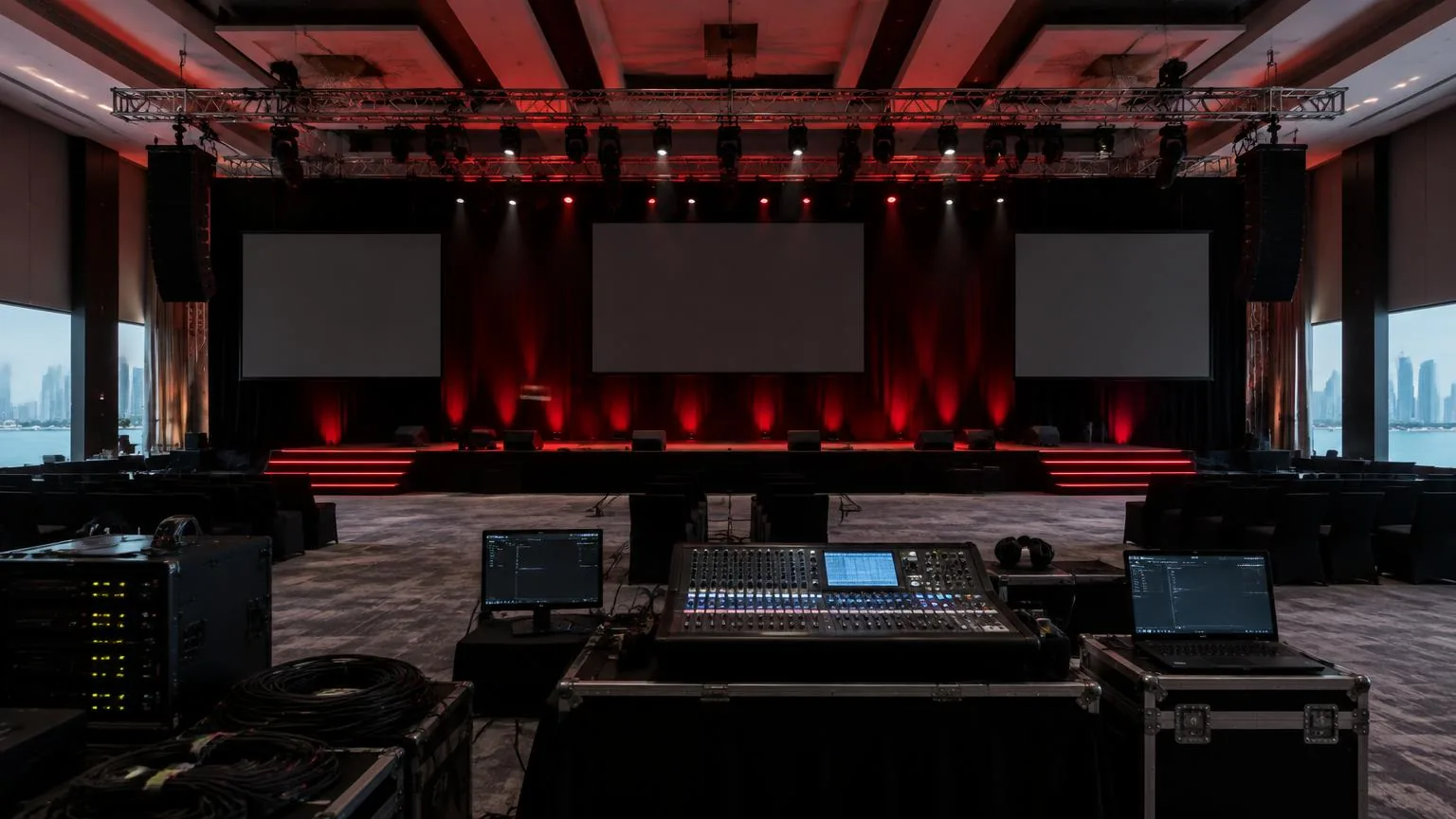
Scenario: reviewing a Dubai presentation venue
Imagine a Dubai presentation planned from a venue brochure and an early seating sketch. During the site visit, the team finds that the proposed screen position would compete with the intended stage entrance. The available backstage waiting area also connects differently to the room than the sketch suggests. Neither observation makes the venue unsuitable, but both affect the layout.
The designer and production lead explore an alternative arrangement, then assign checks for sightlines, access and technical coverage. The revised stage design is issued for the appropriate review rather than approved informally during the walkaround. The venue confirms which service route can be used during setup, while an unresolved storage question remains on the action list. This hypothetical visit creates specific planning changes instead of an unqualified statement that everything looks fine.
Turn the visit into decisions and follow-up
Issue a concise report that separates confirmed information, proposed changes and unresolved questions. Assign an owner and response date to every issue that can affect design, procurement or scheduling. Share relevant findings with people who did not attend, especially department leads whose assumptions have changed. An undocumented discovery may have little practical value if the affected supplier never hears about it.
A further visit may be justified when the design changes materially, access was incomplete or important conditions could not be verified. Alternatively, reliable drawings, documented venue responses or specialist assessments may resolve the remaining questions. Do not repeat visits simply to create a sense of progress. The measure of a useful inspection is whether the team can make better-supported decisions and clearly identify what remains uncertain.
Frequently asked questions
Who should attend an event site visit?
Invite people needed to resolve the visit's objectives, typically relevant production and venue representatives with selected specialists. Attendance should reflect the questions being examined. A large group is not automatically more effective if nobody present can confirm the critical information.
Can photographs replace a site visit?
They can support planning but may omit routes, working conditions and important spatial relationships. Whether remote information is sufficient depends on the event and the reliability of available evidence. Unverified assumptions should remain visible rather than being treated as confirmed.
Does a site visit approve the technical design?
No. It provides information and an opportunity to discuss requirements. Formal venue acceptance, specialist review and other approvals still follow their applicable processes. Seeing or discussing a proposed position is not proof that the arrangement is technically suitable.
What should a site visit report include?
Include the location and visit date, relevant drawing references, confirmed observations, decisions and open actions. Label supporting images clearly. Each unresolved issue should identify an owner and a useful response deadline, especially if it can delay a committed decision.
When is a second visit worthwhile?
When a material design change, missing access or unresolved condition requires direct inspection. First consider whether authoritative documents or a focused specialist response can answer the question. A repeat visit should have a specific objective rather than repeat the original walkthrough.
Producing an event?
Planning, technical production, stage, sound, light and streaming for concerts and corporate events.
Music event management