

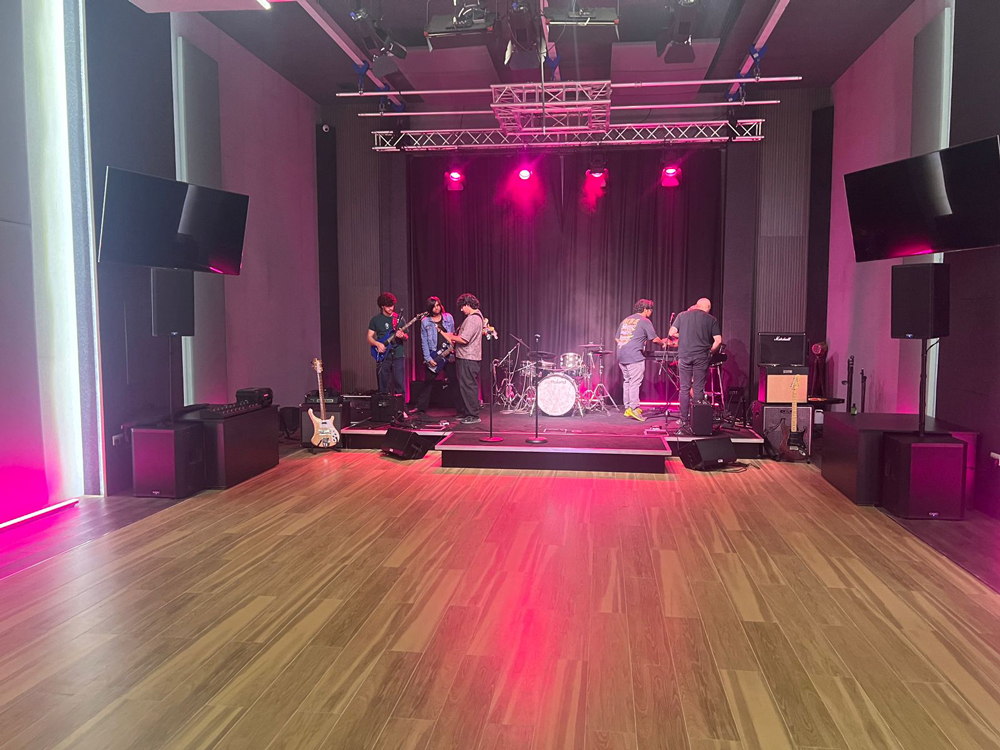
Glossary: Studio design and acoustics
Live room
A studio space designed for performers and sound sources during recording.
Definition
A live room is a studio space where musicians, speakers or other sound sources perform while microphones or direct connections capture their audio. Its dimensions, surfaces and acoustic treatment influence the recorded sound, so the room is chosen and prepared to suit the source and production.
How it works
The live room is the source side of a recording arrangement. Microphones convert acoustic sound into electrical signals, while instruments may connect through direct inputs or amplifiers. Cables carry those signals to a control room or recording system, where an engineer checks levels and records. A live room may host one performer, a small ensemble or multiple sources at once. Its function is defined by the recording activity, not by a particular size or interior style.
Room sound can be part of the performance captured by a microphone. A reflective space may contribute a sense of openness or sustain, while a more controlled room can produce a drier recording that leaves more options for later processing. Neither character is automatically preferable. The right choice depends on the material, microphone pattern and distance, arrangement, and whether other instruments are playing at the same time.
The live room often works with a separate control room. The performer hears a cue mix through headphones or loudspeakers, and communication may use a talkback system. A reliable signal flow connects microphones to preamps, recording tracks and cue outputs. Confirm each route before the performance, since a strong sound in the room does not prove that the intended track is receiving it.
Why it matters
The space affects both the sound and the practical experience of recording. A comfortable layout lets musicians see one another, reach instruments and perform without navigating hazardous cable runs. Clear sightlines and dependable communication can reduce interruptions. The room should also accommodate stands, amplifiers and other equipment without placing reflective surfaces or noisy devices in inconvenient positions.
Acoustic behavior influences how microphones capture a source. Reflections arriving shortly after direct sound can change tone and clarity. Longer decay can blend separate notes or speech. Background noise may be recorded along with the desired source, especially during quiet passages. Managing these factors begins with choosing an appropriate room and microphone position; adding more processing later cannot reliably undo every acoustic or noise problem.
Isolation between performers is another consideration. When several musicians share a live room, microphones may capture nearby instruments as well as their intended source. This spill can be musically useful, but it reduces the ability to edit or rebalance each source independently. Physical arrangement, microphone direction, screens and playing dynamics can influence spill. Screens are not a substitute for structural isolation, and their effect varies with frequency and placement.
Choosing and managing room sound
Start by identifying the desired recording character. A close vocal may benefit from limited room contribution, while a percussion part might use a more spacious sound. Listen to the room from the likely microphone positions, not only from the doorway. Move a source or microphone and compare results at a consistent level. Small changes in distance and orientation can alter the balance between direct sound and reflections.
| Recording need | Possible approach | What to verify |
|---|---|---|
| Dry, close source | Use a suitable position and limit nearby reflections | Listen for room tone and avoid an unnaturally confined sound |
| Room character | Allow a controlled amount of reflected sound | Check decay, noise and unwanted resonances at the microphone |
| Ensemble separation | Arrange sources and microphone directions thoughtfully | Listen for spill and confirm that it supports the arrangement |
| Quiet performance | Reduce avoidable noise and movement | Pause and listen for ventilation, handling and electrical noise |
Acoustic treatment and isolation solve different problems. Acoustic treatment changes reflections and decay inside the room. Soundproofing refers to reducing sound transmission through a structure, which usually depends on construction details such as mass, airtightness and decoupling. A room can sound controlled inside yet still transmit noise outside, or be isolated from neighbors while sounding reflective within.
A room's RT60 is one way to describe how sound energy decays, but a single value cannot fully characterize the room at all frequencies or positions. Listen for uneven decay, flutter echoes, resonances and noise. Avoid assuming that covering every hard surface with absorptive material is ideal. Different sources benefit from different acoustic conditions, and excessive absorption can make the environment uncomfortable or acoustically unbalanced.
Practical example
For a small ensemble recording in a Dubai studio, the engineer first considers whether the musicians should play together or record separately. If interaction is important, the group can share the live room and accept some microphone spill. The engineer places louder amplifiers farther from sensitive microphones, checks the arrangement from each microphone position and asks the players to perform a short passage while levels are monitored.
- Walk the room and identify noise sources, access routes and any reflections that are especially prominent at the planned microphone positions.
- Agree the instrument layout and cable paths before stands and cases fill the available space.
- Check microphone placement and input levels with a representative performance, not only a quiet sound check.
- Test the headphone cue mix and talkback so players can request changes without leaving their positions.
- Record a short take and listen for spill, room decay, clipping, handling noise and unwanted background sound before continuing.
If the recording has more room sound than expected, the engineer can compare a closer microphone position or a different direction before changing the whole arrangement. If the spill is musically cohesive, it may be retained. The decision should serve the intended sound rather than pursue isolation as an end in itself.
Common mistakes
- Assuming a large room is always better ignores decay, noise, dimensions and the sound required for the recording.
- Using acoustic panels as if they prevent sound transmission confuses room treatment with structural isolation.
- Positioning microphones before the performers and equipment are arranged can leave poor sightlines and compromised cable routes.
- Ignoring headphone balance and talkback makes performance communication harder and may encourage unnecessary interruptions.
- Treating microphone spill as automatically harmful overlooks that shared room sound can be part of a coherent ensemble recording.
Prepare the live room for the actual session, keep walkways and exits clear, and test the whole recording path before an important take. When recording in a shared building, respect access, noise and building rules. If persistent noise or isolation is a concern, identify its source and seek appropriate technical advice rather than relying on improvised coverings or unsafe modifications.
Frequently asked questions
What is a live room used for?
It is used to record performers and sound sources, including vocals, instruments and ensembles, using microphones or direct connections.
Does a live room need to sound lively?
No. The name describes its recording function, not a required amount of reverberation. The appropriate acoustic character depends on the source and production.
Can multiple musicians record in one live room?
Yes. They can perform together, but microphones may capture other instruments. Arrangement and microphone placement help manage spill.
Are acoustic panels the same as soundproofing?
No. Panels can change reflections inside a room. Reducing sound transmission generally depends on the room's construction and isolation details.
How do performers hear the control room?
Commonly through a headphone cue mix, with talkback for communication. The specific monitoring setup should be checked before recording.
Planning a studio?
Our studio design consultancy covers layout, acoustics coordination, systems, equipment and commissioning.
Studio design consultancy