

Blog / Uncategorized
Dolby Atmos Music Mixing: A UAE Artist Guide
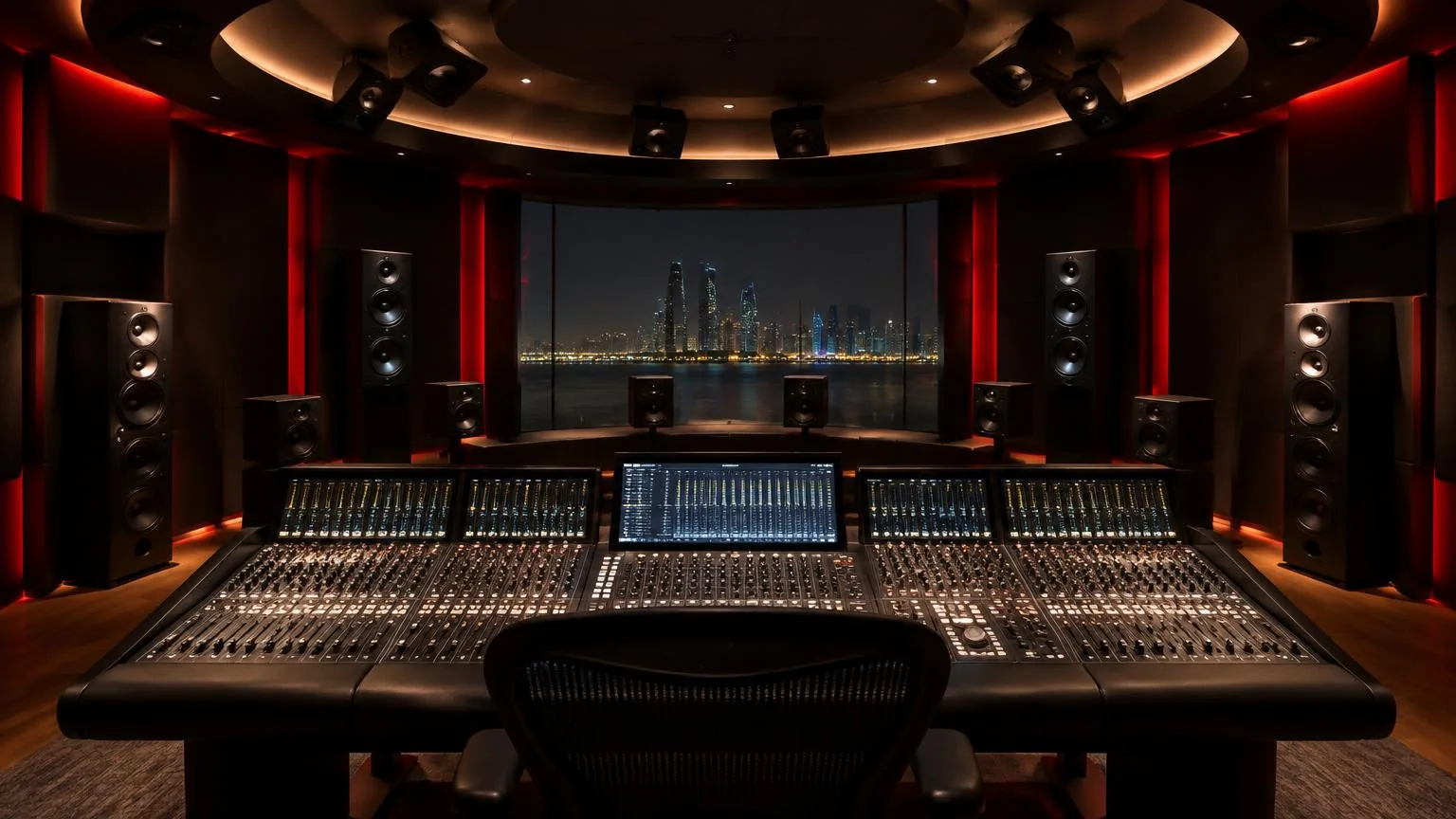
Dolby Atmos music mixing places sounds in a three-dimensional listening field rather than only between left and right speakers. For an artist in Dubai or Abu Dhabi, the practical question is not whether every release needs an immersive version. It is whether the arrangement, available source files, listening formats and release plan justify making one. A good Atmos mix preserves the song's intent while offering a different sense of space. It begins with a strong recording and an agreed delivery brief, not with moving sounds around for novelty.
What changes when music is mixed in Atmos?
In conventional stereo, an engineer positions sound between two channels and shapes depth with level, tone, reverb and dynamics. An Atmos session can use a surrounding speaker bed and individual audio objects whose positions are described in metadata. That gives the mixer more ways to place a voice, instrument, ambience or effect. The listener may hear a speaker-based immersive render or a headphone version produced through binaural processing. Those playback experiences are not identical, so the mix needs checks on the formats the audience is likely to use.
More available space does not mean every element should be spread to the edges. A lead vocal often needs a stable focus, while harmonies, percussion or room sound can provide width or height. If an artist's identity depends on an intimate, centered performance, preserving that intimacy matters more than demonstrating every speaker. A useful first conversation is about the intended emotional effect of the arrangement. Ask what must remain anchored and what can move, then compare the result against the stereo master without assuming the two versions will sound exactly alike.
Start with the source material, not the speaker layout

A mixer needs separated tracks or stems that leave meaningful choices open. A single finished stereo file restricts how independently a vocal, drums and ambience can be positioned. Ask the producer for consolidated audio files beginning at the same time position, a reference stereo mix, tempo information and notes about effects that define the song. Document which effects are printed and which are to be rebuilt. If a chorus relies on a particular delay or reverb, losing it while exporting stems could change the song more than any immersive decision.
Before creative work begins, listen for clicks, missing fades, phase conflicts and unexpectedly different versions of a take. Check that files align and that the naming identifies the actual content. If alternate vocal takes or language versions exist, agree which is approved. A clean handover reduces technical guesswork and protects the artist's approval process. The same preparation also makes ordinary stereo mixing more efficient; immersive production does not replace the fundamental discipline of preparing a session correctly.
Plan a listening hierarchy
Identify the elements that carry melody, rhythm and lyrical meaning. Decide which should remain intelligible on both speakers and headphones, including in a noisy real-world listening environment. Then decide where space can strengthen the arrangement. A sparse introduction may benefit from a close center, followed by wider harmonies as the chorus arrives. A live recording may use room ambience to convey the venue. These are artistic choices, not technical obligations. An immersive mix can be restrained and still feel distinct from stereo.
Listen to transitions between sections rather than judging a spectacular isolated moment. If a synth sweeps behind the listener during the chorus but the next verse suddenly collapses without a musical reason, the move may feel distracting. Test whether positioning helps listeners follow the song. Keep an approval note for each major decision, especially when several producers or band members have different expectations. Specific comments such as “the backing vocal masks the lead in the second chorus” are more useful than a general request for “more Atmos.”
Understand headphone and speaker playback
Many listeners experience immersive releases on headphones. A binaural rendering attempts to communicate spatial cues over two earphones, but perception varies with fit, device and listener. A convincing speaker-room decision might not translate as expected to headphones. Evaluate the headphone render deliberately, then return to speakers to see whether adjustments work in both contexts. Also check the stereo-compatible or downmixed presentation where it is available. The goal is not identical playback everywhere; it is a coherent song in each realistic listening situation.
Compare at sensible levels. Louder playback can seem more exciting even when a balance is worse. Note whether the lead stays clear, low frequencies remain controlled and reverbs avoid swallowing words. Do not mistake a platform's playback processing for a problem in the mix without checking the original approved files. The artist should audition the actual deliverable, not only a dramatic demonstration in the mixing room. Ask what format will be supplied for approval and how revisions will be reviewed before the engineer begins.
Keep stereo and immersive versions coordinated
An Atmos version is often part of a release that also includes stereo. Decide whether the immersive mix will be created from the same approved production session and what changes may be made independently. If the stereo mix receives a late vocal edit, that edit should be reflected in the immersive version as appropriate. Version names and dates prevent confusion between an early preview and a final approved master. Keep one clear point of contact for sign-off. Otherwise, a seemingly small edit can lead to two different published performances.
Ask about deliverables before booking: the approved stereo reference, immersive master, any monitoring version and the technical specifications required by the chosen distributor. Requirements vary by platform and can change, so confirm current delivery rules directly with the distributor rather than relying on a generic checklist. Allow time for quality control after the creative mix. Checking file integrity and metadata is less glamorous than positioning a sound, but it is essential if the release is meant to reach listeners correctly.
How to brief a mixing session in the UAE
Bring a concise brief describing the song, reference recordings for mood rather than copying, release deadline, intended formats and who can approve changes. Specify whether the project is music only or includes video, since picture synchronization affects the workflow. Tell the engineer which production elements are fixed and which are open to reinterpretation. If remote participants are approving from Dubai while the session takes place in Abu Dhabi, agree how they will receive reliable listening files and how comments will be consolidated.
BarCoe Studios describes immersive Dolby Atmos mixing as an audio production option. Its audio work includes recording, mixing and mastering at its Abu Dhabi studio. Explore the audio production services and the broader studio services for context, then explain your particular project before assuming a workflow. If you are still preparing tracks, the existing guide to recording, mixing and mastering helps separate those stages. The article on preparing for a recording session is useful before tracking material for any mix format.
Make the decision for the song
Choose an immersive mix when there is a clear artistic or release reason and the source material allows meaningful spatial choices. If the budget or schedule only covers a stereo release, focus on excellent recording, editing and stereo quality first. Neither format automatically repairs a weak arrangement or an unsuitable source. Listen critically, ask how approval and delivery work, and keep the artist's intent central. The strongest result is a version that listeners enjoy as music, whether they notice the technology behind it or not.
A useful approval checklist
Before final sign-off, ask three people to listen with different priorities: the artist for emotional intent, the producer for arrangement and the engineer for technical integrity. Note the exact time of any concern and whether it appears in speakers, headphones or both. Confirm that the lead remains intelligible when the chorus becomes dense. Save the approved mix alongside the stem version used to create it, and keep the stereo master clearly labelled. If the team changes the song after approval, request a specific revision rather than assuming that an older immersive file can simply be delivered. These habits protect the musical decisions across playback formats.
Frequently asked questions
What is Dolby Atmos music mixing?
It is an immersive mixing approach that can place audio in a surrounding bed and position individual sound objects. The song still needs a coherent arrangement and clear lead elements.
Do I need stems for an Atmos mix?
Separated tracks or useful stems give the mixer more control than a single finished stereo file. Supply aligned exports and an approved reference mix.
Will an Atmos mix sound the same on headphones?
Headphones use a binaural presentation that differs from listening on speakers. Check both formats where relevant and approve the actual deliverables.
Does Atmos replace a stereo master?
No. Plan stereo and immersive versions as related deliverables and keep edits consistent. Confirm current technical requirements with your distributor.
When should an artist consider immersive mixing?
Consider it when the arrangement, source files and release plan support a purposeful spatial version. Do not treat the format as a fix for weak source recordings.
Discuss recording, stereo mixing and immersive delivery for your project through BarCoe Studios' audio production services.